Birsa Munda's ulgulan
Ulihatu, Khunti
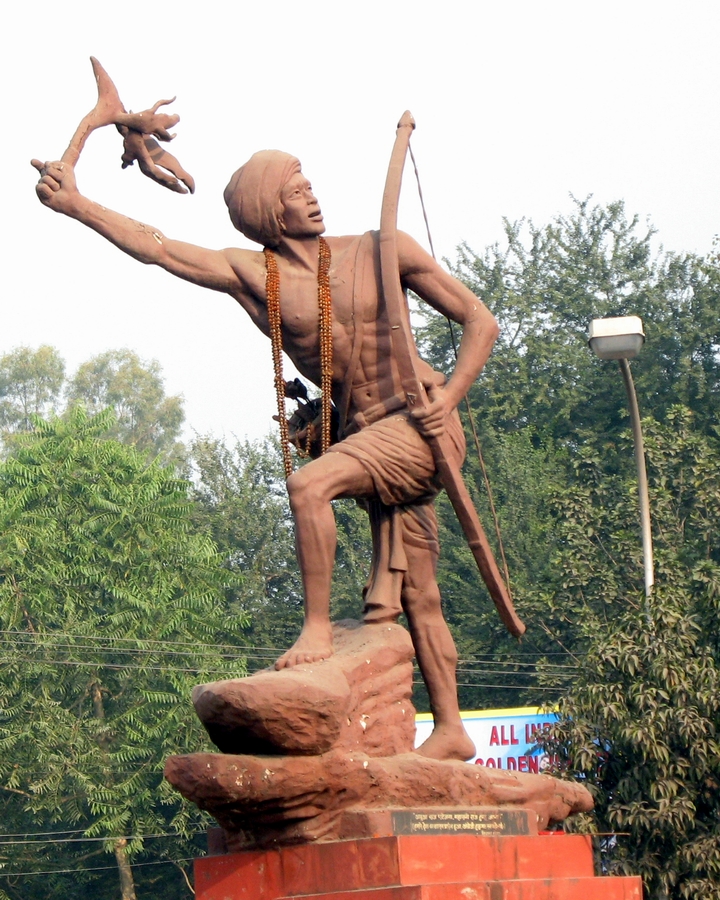
Birsa Munda leads the Munda rising of 1899 to 1900 against landlords, missions and the Raj; he dies in Ranchi jail aged about 25.
The Munda villages of Chota Nagpur held land as khuntkatti, cleared and owned by the founding clan. Through the nineteenth century outside landlords, moneylenders and contractors, the dikus, turned many Mundas into tenants owing rent and forced labour, and the courts and missions offered little redress. Birsa, born around 1875 and schooled at the German mission in Chaibasa, began preaching in 1895 as a prophet of a reformed faith and of Munda rule, and his followers called him Dharti Aba, father of the earth.
The ulgulan, the great tumult, began on Christmas Eve 1899 with arrows shot into churches and at Christian congregations around Khunti, and in early January the rebels attacked the Khunti police station. On 9 January 1900 troops stormed Sail Rakab, a fortified hill beside Dombari Buru where Birsa's followers had gathered; the official count was ten killed, while Munda accounts put the dead at two hundred or more. Birsa was seized in the Porahat forest of Singhbhum on 3 February and died in Ranchi jail on 9 June 1900, officially of cholera. Ulihatu and nearby Chalkad both claim his birth; the pin marks Ulihatu, his family's village.
The Chota Nagpur Tenancy Act of 1908 recognised khuntkatti rights and restricted the sale of tribal land to outsiders. It survived an attempt to loosen it: amendments passed in 2016 to ease the transfer of tribal land were returned by the governor and withdrawn in 2017. Jharkhand was created on 15 November 2000, the date kept as Birsa's birthday, which since 2021 has also been observed nationally as Janjatiya Gaurav Divas.
- political
- colonial
- religion