Kanishka and the first Buddha images
Mathura, Uttar Pradesh
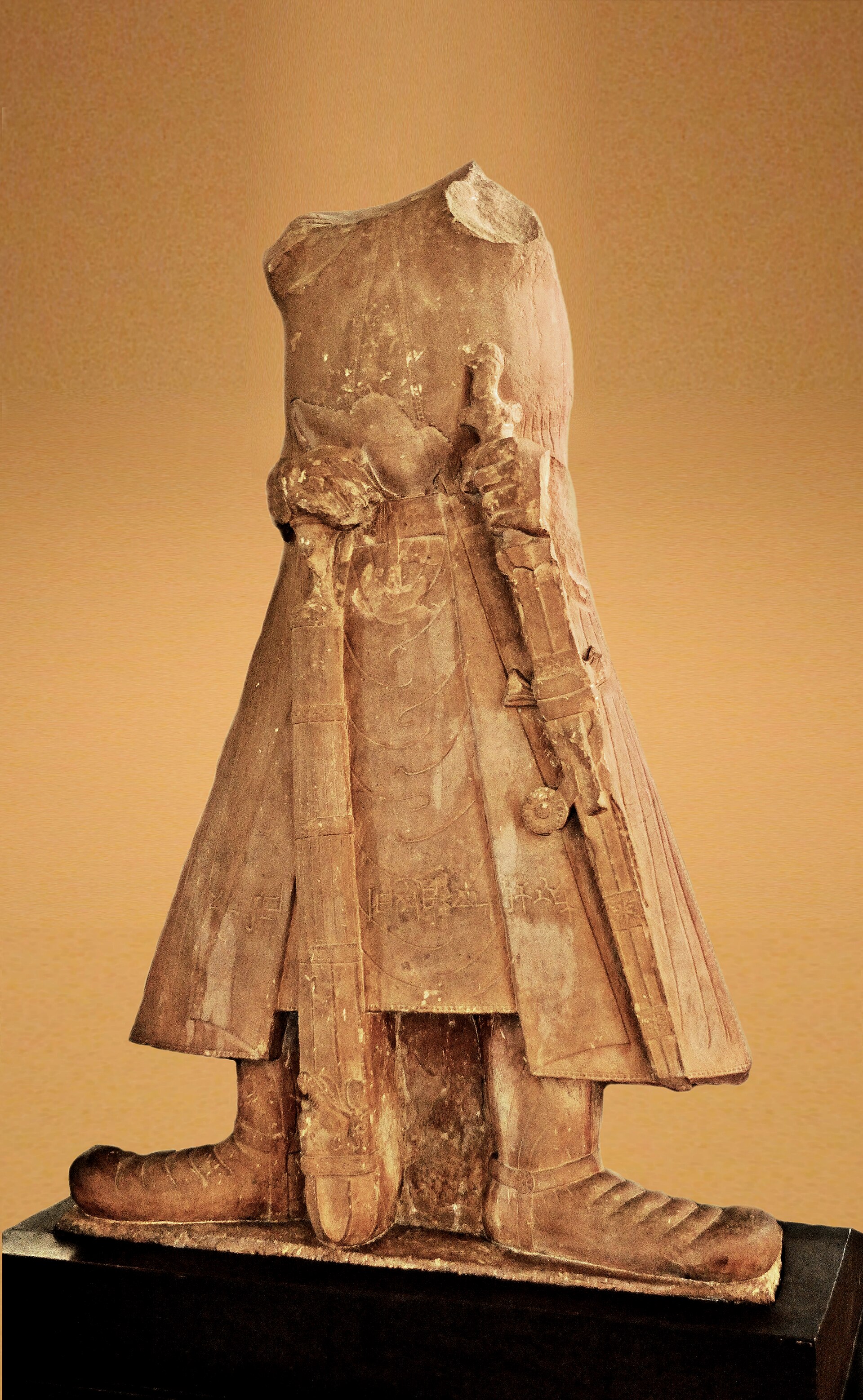
Kanishka's Kushan empire joins Bactria to the Ganga plain; at Mathura and in Gandhara sculptors make some of the earliest images of the Buddha.
The Kushans came from Bactria, north of the Hindu Kush, and under Kanishka held both Purushapura, modern Peshawar, and Mathura. The Rabatak inscription, found in Afghanistan in 1993, lists Saketa, Kaushambi and Pataliputra under Kanishka's rule, 'as far as' Champa. His coins put Greek, Iranian and Indian gods side by side, the Buddha among them, and a headless statue of him in a long Central Asian coat was found at Mat, north of Mathura.
The red sandstone workshops of Mathura and the grey schist carvers of Gandhara produced, in these decades, some of the earliest images of the Buddha in human form; which school came first has been argued for a century. So was Kanishka's date, with proposals from 78 to 278 CE, until Harry Falk's reading of an astronomical text in 2001 put the start of his era at 127 CE. Most historians have since accepted it. How far his rule reached into the Ganga plain depends on how far Rabatak is trusted.
- political
- art
- religion