Nalanda mahavihara
Nalanda, Bihar
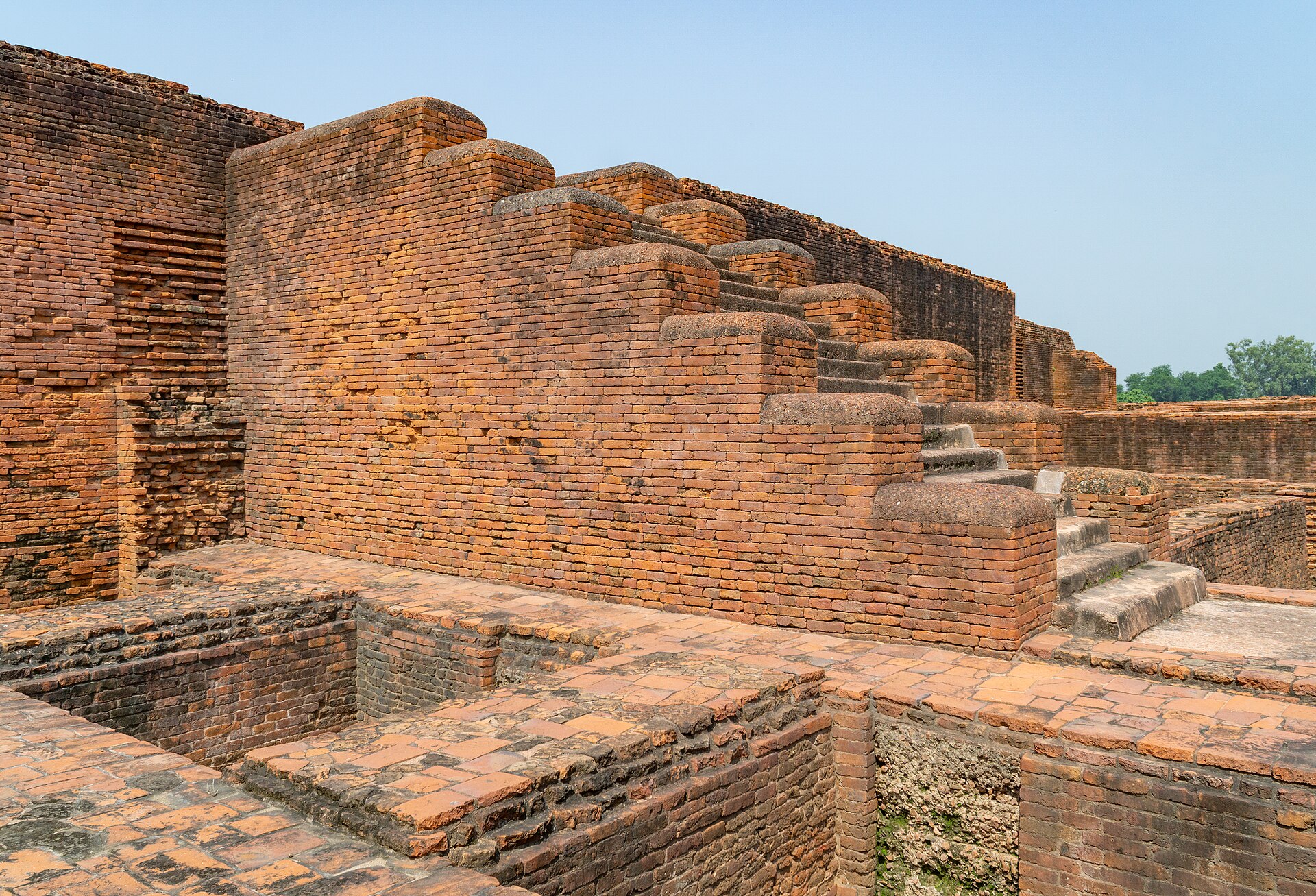
A monastery founded under Kumaragupta I grows into a Buddhist university that draws scholars from China, Korea and Tibet until the 13th century.
Xuanzang, who studied here in the 630s, was told that the monastery was begun by a king Shakraditya, and he is usually identified with the Gupta emperor Kumaragupta I, who ruled from about 415 to 455 and whose title Mahendraditya means the same thing: Shakra and Mahendra are both names of Indra. Later Gupta kings, Harsha and the Pala kings of Bengal added monasteries, temples and the revenues of villages; the excavated ruins are a row of brick monasteries facing a row of temples.
Nalanda taught Buddhist philosophy, logic, grammar and medicine, and its teachers shaped the Buddhism of Tibet. It declined as royal patronage moved to the Pala foundations at Vikramashila and Odantapuri, and was sacked around 1200. Blaming Bakhtiyar Khalji is an inference: the nearest account, Minhaj-i Siraj's of about 1260, describes his storming of a fortress-college at 'Bihar', probably Odantapuri, and does not name Nalanda. In 1234-36 the Tibetan pilgrim Dharmasvamin found the abbot, then over ninety, teaching some seventy monks in the ruins. Alexander Cunningham identified the site in the 1860s.
- religion
- science