The first train, and the telegraph
Bori Bunder, Bombay
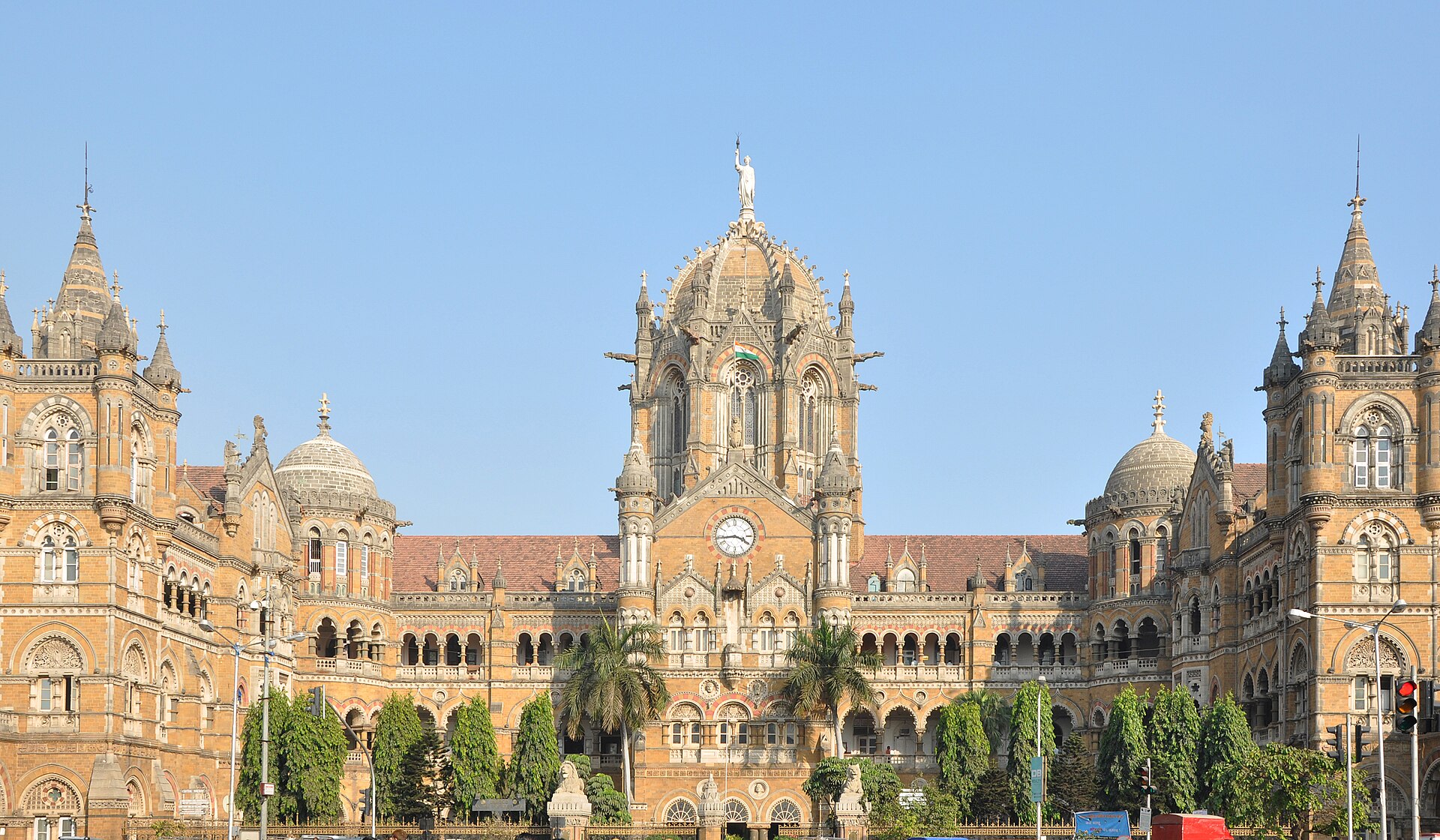
On 16 April 1853 the first passenger train runs 34 km from Bori Bunder to Thane; by 1856 telegraph wires link Calcutta, Agra, Bombay and Madras.
The Great Indian Peninsula Railway's first train, fourteen carriages behind three locomotives, left Bori Bunder in the afternoon of 16 April 1853 with about 400 passengers and ran 21 miles to Thane. The East Indian Railway opened its first line out of Howrah the next year. Dalhousie's railway minute of 1853 laid out the trunk routes, built by private companies on a guaranteed return of five per cent paid from Indian revenues.
The telegraph came at the same time. William O'Shaughnessy's line from Calcutta to Diamond Harbour opened in 1851, and by 1856 some 4,000 miles of wire connected Calcutta, Agra, Bombay, Madras and Peshawar. On 11 May 1857 the Delhi telegraph office sent the first warning of the rising up the line to the Punjab.
The guarantee system made Indian railways expensive and tied them to British industry, and nationalists from Dadabhai Naoroji onward counted them part of the drain of wealth. They also knit the subcontinent into a single market.
- science
- trade
- colonial