Rajaraja's temple at Thanjavur
Brihadisvara temple, Thanjavur, Tamil Nadu
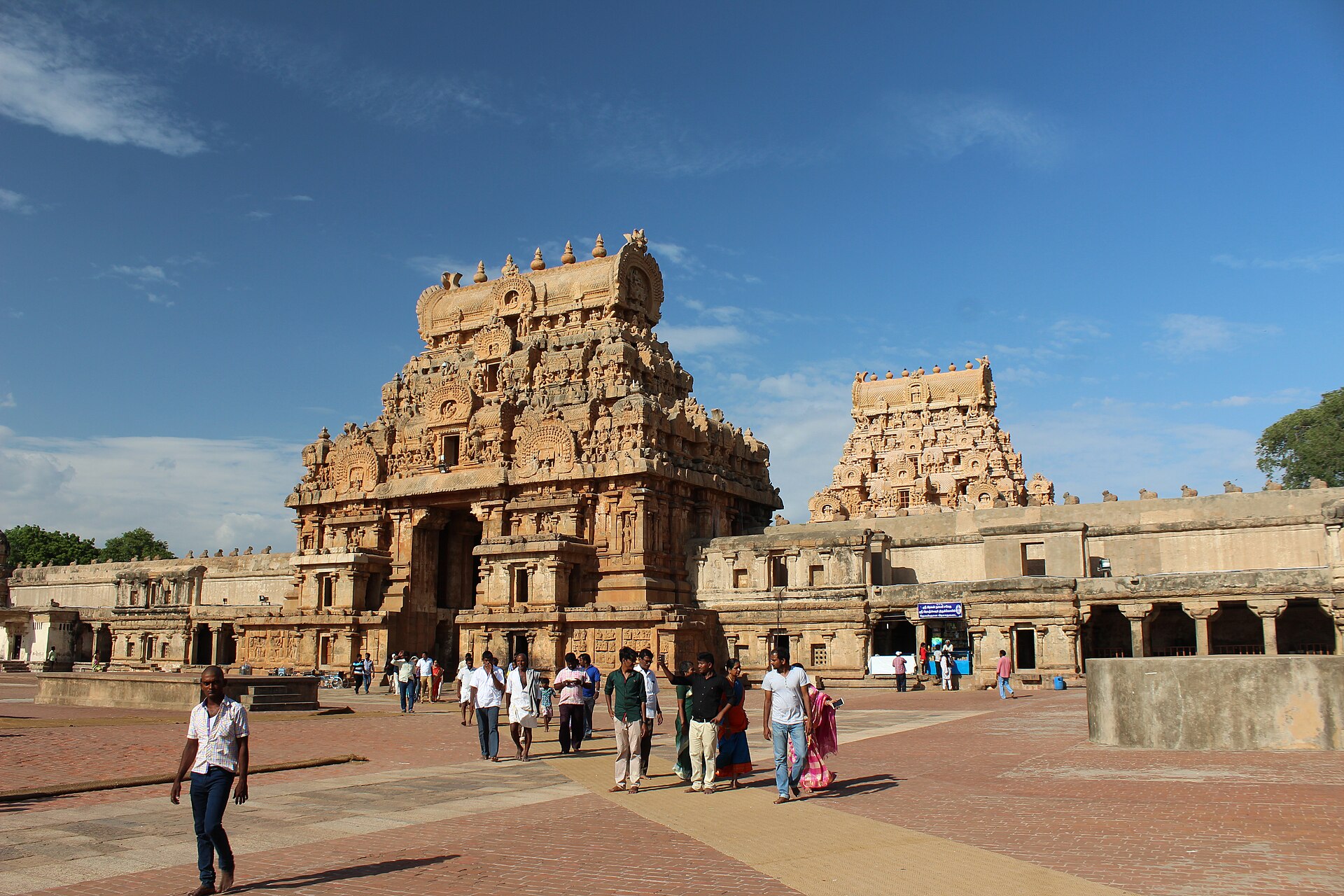
Rajaraja I consecrates the Brihadisvara at Thanjavur in 1010, a granite temple whose walls record the lands and gifts of a growing Chola state.
Building began around 1003, and Rajaraja consecrated the temple himself in his twenty-fifth regnal year, 1009–10. Its tower rises about 60 metres over the ground. Inscriptions on the temple and its enclosure list villages across the Kaveri delta and beyond that owed it paddy, gold and service. One of them names, one by one, the 400 temple women Rajaraja brought from other Chola temples, and the dancing-masters, musicians, tailors, goldsmiths and others assigned to serve it.
Thanjavur marks the moment the Cholas became the dominant power of the peninsula. Rajaraja had taken the Pandya and Chera countries, Gangavadi in southern Karnataka and northern Sri Lanka, where Anuradhapura was sacked and Polonnaruwa became a Chola provincial seat; his inscriptions also claim the "twelve thousand ancient islands" of the sea, usually read as the Maldives.
The dates are secure; the scale of the state is argued over. Nilakanta Sastri read the temple records as the work of a centralised bureaucracy. Burton Stein read them as a segmentary state, in which the king's ritual authority ran far beyond the reach of his officials.
- art
- religion
- state-formation