Mahmud of Ghazni at Somnath
Somnath, Prabhas Patan, Gujarat
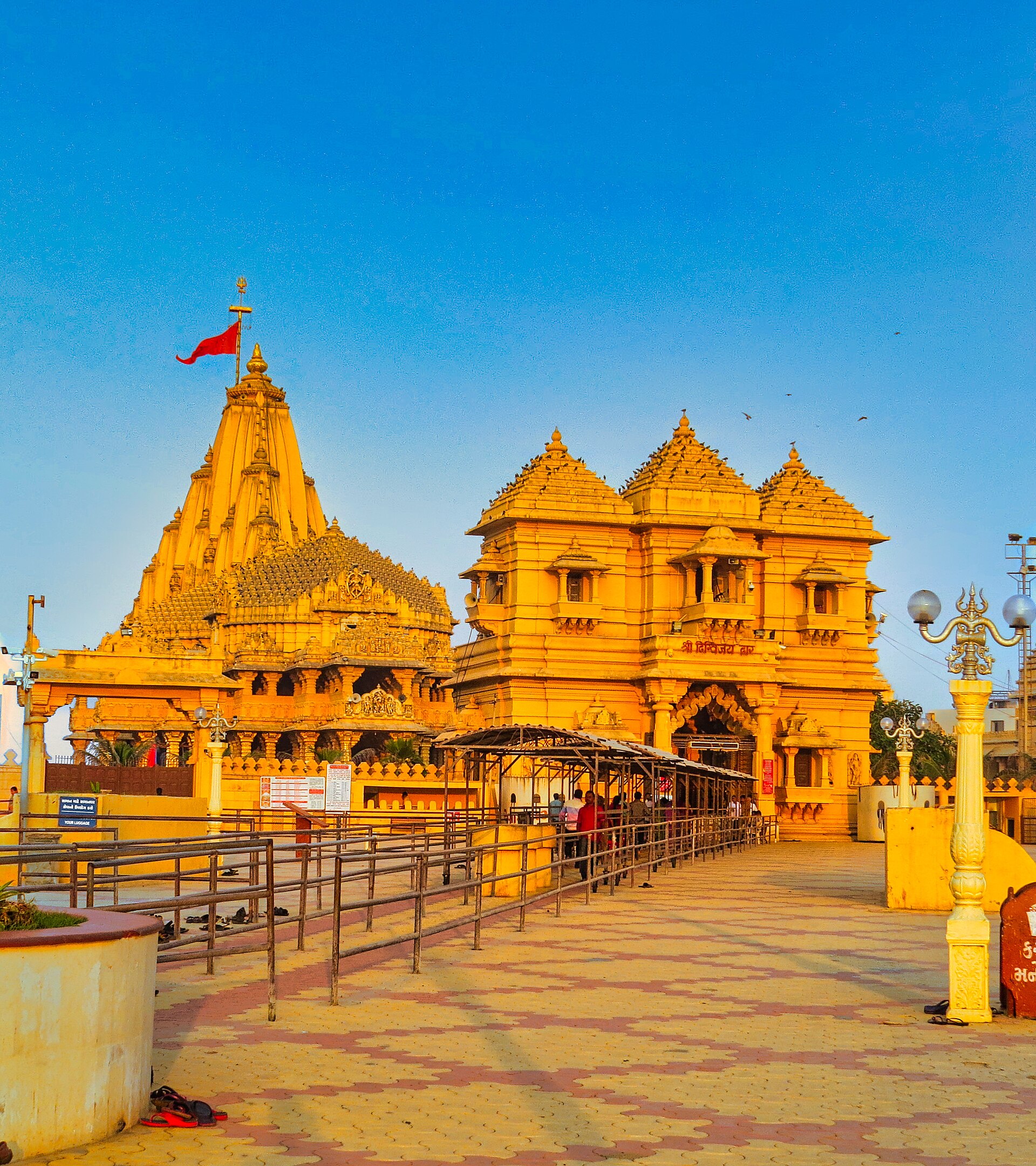
In January 1026 Mahmud of Ghazni sacks the Somanatha temple on the Saurashtra coast, the most remembered of his raids into India.
Mahmud left Ghazni in the autumn of 1025, crossed the desert from Multan, passed the Chaulukya capital at Anahilavada, whose king Bhima fled, and reached Somnath in early January 1026. Ibn al-Athir describes the breaking of the idol, more than fifty thousand dead and a treasure worth over two million dinars; Mahmud went home through Sindh. He held no territory in Gujarat. His state was centred on Ghazni and Khurasan and reached into the Punjab, and raids like this helped pay for it.
On the map Somnath is a raid, not a frontier. The Chaulukya king Bhima I returned once Mahmud had gone, and an inscription of 1169 at Prabhas Patan records the temple's rebuilding under Kumarapala.
How the raid was remembered is contested. Romila Thapar has shown that the Persian accounts grow more elaborate over the centuries, that local Sanskrit and Jain sources say little about it, and that the idea of a lasting Hindu trauma owes much to Lord Ellenborough's 1842 proclamation about the gates of Somnath, the debate it set off in Britain, and the temple's reconstruction after independence.
- war
- religion