Chapter 03 · c. 321 to 185 BCE
The Mauryan Empire
मौर्य साम्राज्य
In the generation after Alexander's retreat from the Punjab, Chandragupta Maurya took Magadha and the north-west, in an order still argued over, and built the first state to span most of the subcontinent. His grandson Ashoka's rock and pillar edicts are the oldest deciphered, datable writing in India, and they speak in the emperor's own voice.
The map shows the empire near its greatest extent around 260 BCE. The outline is approximate: Mauryan control was a web of roads, garrisons and tribute rather than a surveyed border.
Events in this chapter
326 BCE – 316 BCE ±5 · Taxila, Punjab (Pakistan)
Taxila, crossroads of the north-west
Gandhara's chief city: once Persian, host to Alexander in 326 BCE, then a Mauryan provincial seat governed by a prince.
321 BCE ±5 · Pataliputra (Patna), Bihar
Chandragupta takes Magadha
Chandragupta Maurya overthrows the Nanda king and rules from Pataliputra; later tradition credits his minister Chanakya with the plan.
305 BCE – 303 BCE ±2 · Kabul valley (Paropamisadae)
Treaty with Seleucus
Seleucus Nicator gives Chandragupta lands along the Indus under a marriage pact and receives five hundred war elephants.
268 BCE – 232 BCE ±10 · Sanchi, Madhya Pradesh
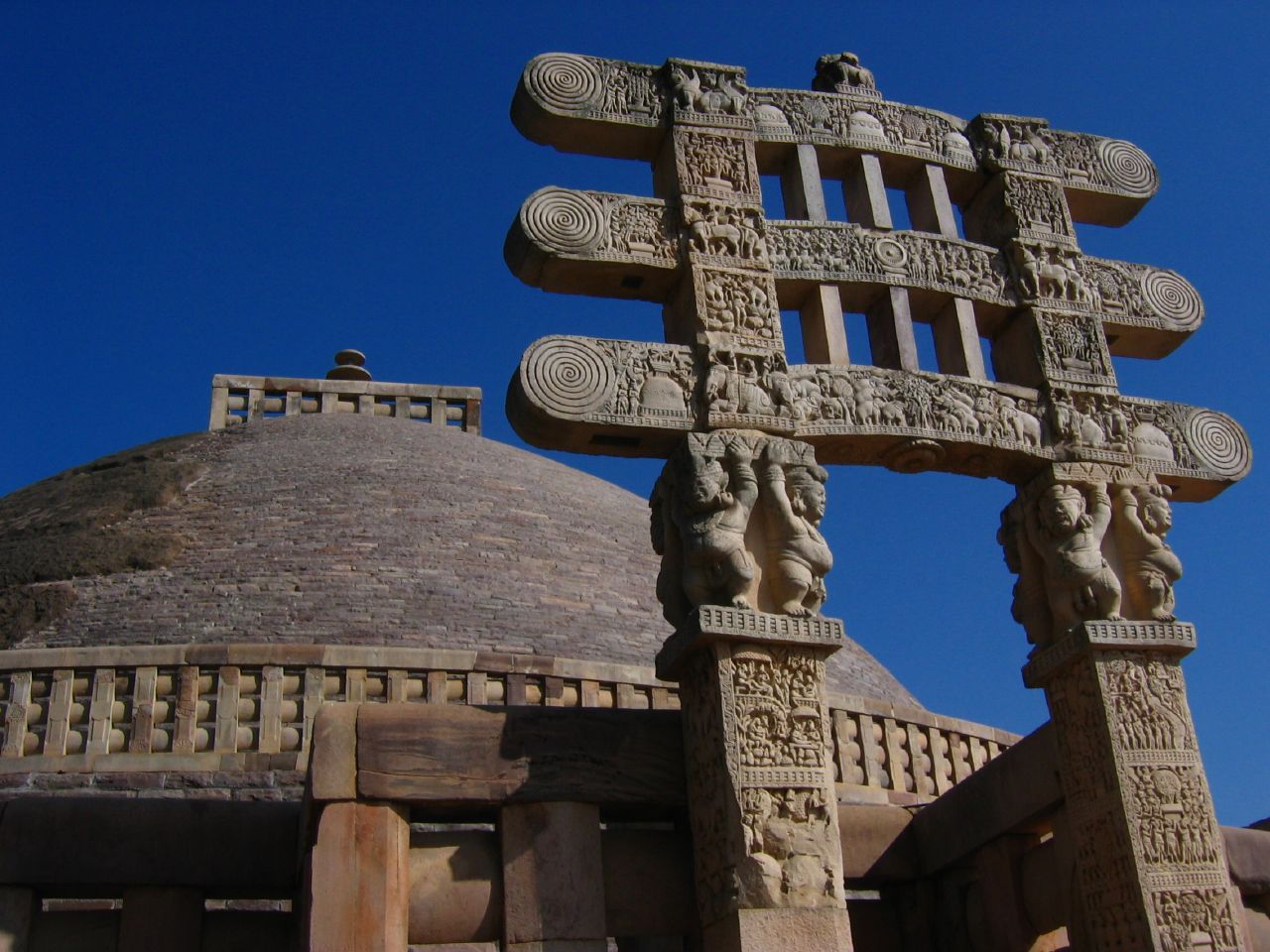
The Great Stupa at Sanchi
Ashoka's brick stupa, doubled in size and cased in stone in the 2nd century BCE, and given carved gateways around the turn of the era.
261 BCE ±4 · Dhauli, Odisha
The Kalinga war
Ashoka conquers Kalinga; his Rock Edict XIII counts the dead and deported and records his remorse and turn to dhamma.
258 BCE – 242 BCE ±3 · Girnar rock edict, Junagadh, Gujarat
The edicts of Ashoka
Rock and pillar edicts in Prakrit, Greek and Aramaic, from Kandahar to Karnataka; the oldest deciphered, datable writing from India.
185 BCE ±5 · Pataliputra (Patna), Bihar
Pushyamitra ends the dynasty
The general Pushyamitra kills the last Maurya, Brihadratha, at a review of the army and founds the Shunga dynasty.