Chapter 02 · c. 2600 to 400 BCE
Indus and Veda
सिंधु और वेद
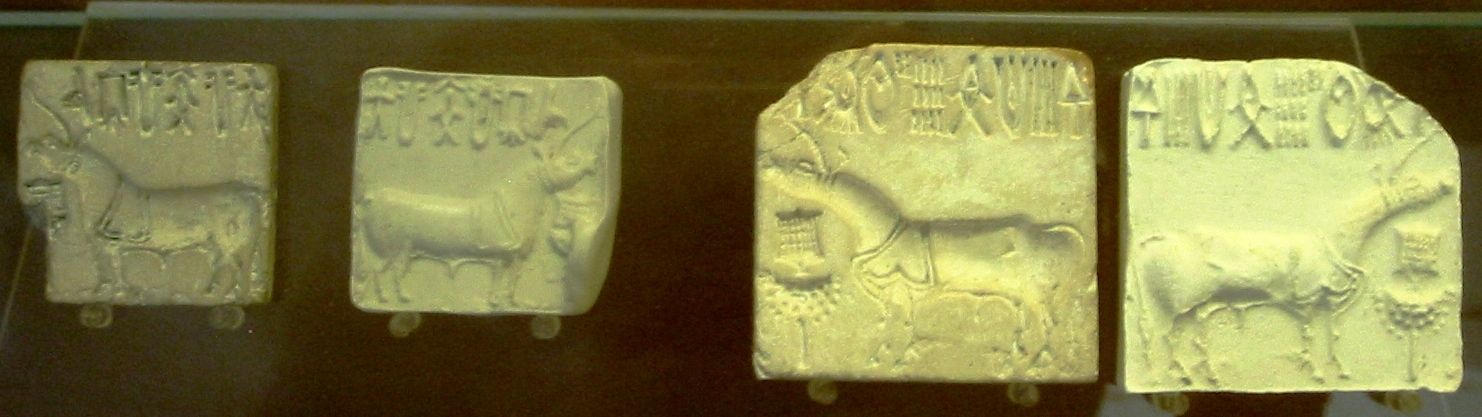
Around 2600 BCE towns along the Indus and the Ghaggar-Hakra became cities: baked-brick houses on planned streets, covered drains, standard weights, and a script on seals that has not been deciphered. Mohenjo-daro, Harappa, Dholavira and Lothal traded from Afghanistan to the Gulf. After about 1900 BCE the large cities emptied, and settlement shifted east towards the Yamuna and south into Gujarat.
The Rigveda, probably composed in the greater Punjab between about 1500 and 1200 BCE and handed down orally for centuries before it was written, is the oldest Indian text that can be read. It describes cattle-herding clans and no cities, and it cannot be securely tied to any excavated site. Over the following centuries iron, Painted Grey Ware villages and then walled towns spread across the Ganga plain. By the fifth century BCE the sixteen great kingdoms and republics of the Buddhist lists, the mahajanapadas, contested the north, and the Buddha and Mahavira taught in their capitals.
The map draws no boundary for this chapter. There is no clear evidence that the Harappans formed a single state, and the Vedic clans and early kingdoms left no record of borders. The pins mark excavated sites; where a pin stands for a region, the event says so.
Events in this chapter
2600 BCE – 1900 BCE ±100 · Dholavira, Khadir island, Kutch, Gujarat
Dholavira and its reservoirs
On an island in the Rann of Kutch, a walled Harappan city stores monsoon water in rock-cut reservoirs and leaves ten large signs by its north gate.
2500 BCE – 1900 BCE ±100 · Mohenjo-daro, Larkana, Sindh (Pakistan)
Mohenjo-daro, the planned city
One of the largest Harappan cities rises on the Indus: baked-brick houses, covered drains, a citadel with the Great Bath, and no palace or temple yet found.
2400 BCE – 1900 BCE ±100 · Lothal, Ahmedabad district, Gujarat
Lothal and the dock debate
A small Harappan town near the Gulf of Khambhat, with a large brick basin its excavator called a dockyard and others read as a reservoir.
1900 BCE – 1300 BCE ±100 · Harappa, Sahiwal district, Punjab (Pakistan)
Harappa and the end of the cities
From about 1900 BCE the big Indus cities shrink and empty, and at Harappa a smaller settlement buries its dead in a new style, called Cemetery H.
1500 BCE – 1200 BCE ±200 · Ravi (Parushni) river near Lahore, Punjab (Pakistan)
The Rigveda and the land of seven rivers
Hymns in Vedic Sanskrit are composed in the greater Punjab; the pin is the Ravi, where Rigveda 7.18 sets the battle of the ten kings.
1200 BCE – 600 BCE ±100 · Hastinapur, Meerut district, Uttar Pradesh
Painted Grey Ware villages of the doab
Fine grey pottery painted in black marks the farming villages of the later Vedic Ganga-Yamuna doab; Hastinapur is its key excavated site.
600 BCE – 400 BCE ±50 · Rajgir (Rajagriha), Nalanda district, Bihar
Rajagriha and the sixteen great realms
Magadha's hill-ringed capital rises among sixteen rival kingdoms and republics; the Buddha and Mahavira both teach here.
530 BCE – 440 BCE ±20 · Sarnath, near Varanasi, Uttar Pradesh
The Buddha's first sermon at Sarnath
In the deer park near Varanasi the Buddha preaches his first sermon to five ascetics; its date depends on which chronology of his life is right.