Mohenjo-daro, the planned city
Mohenjo-daro, Larkana, Sindh (Pakistan)
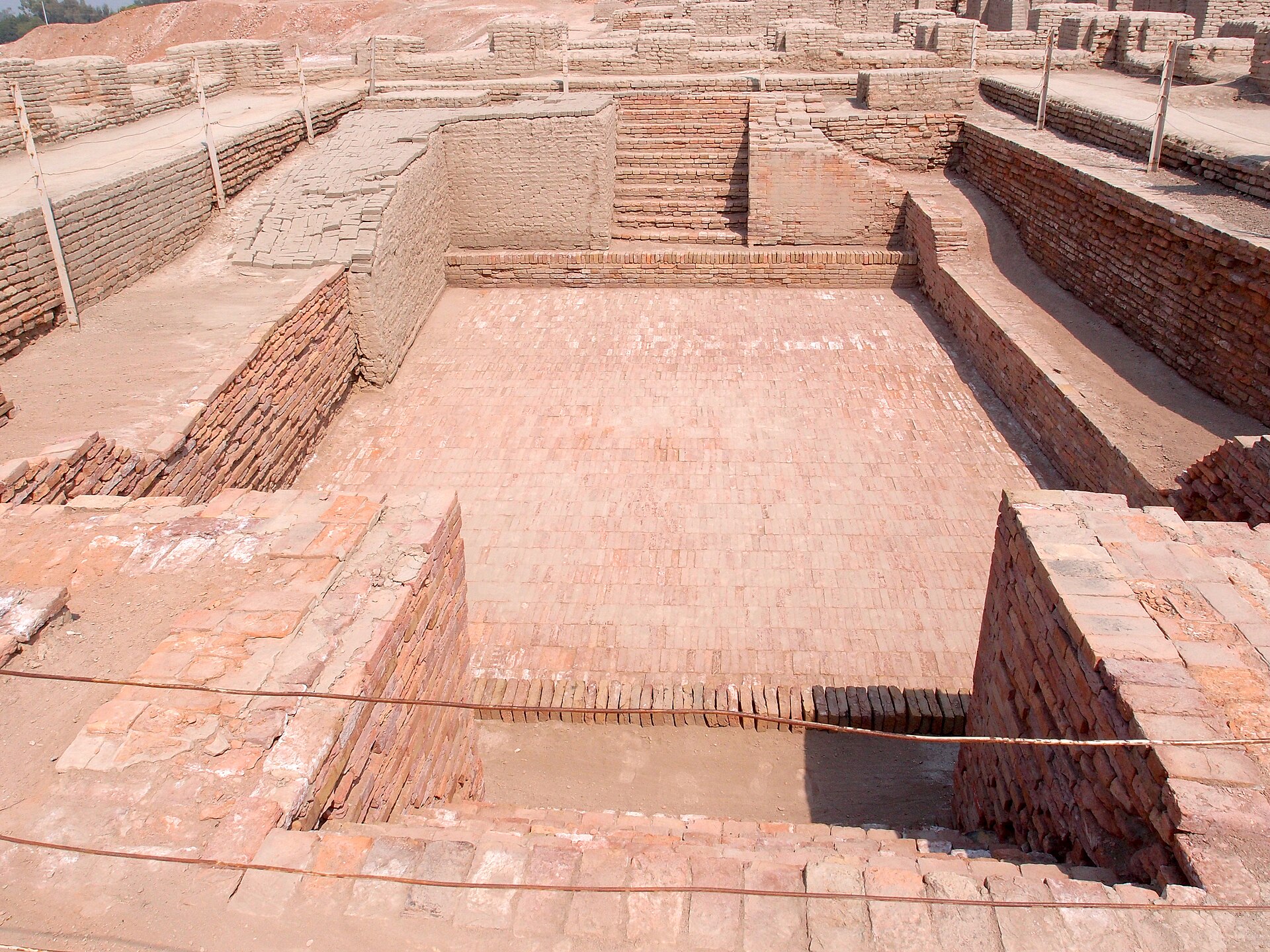
One of the largest Harappan cities rises on the Indus: baked-brick houses, covered drains, a citadel with the Great Bath, and no palace or temple yet found.
R. D. Banerji of the Archaeological Survey began digging the mound in 1922. In 1924 John Marshall announced that it and Harappa belonged to one forgotten civilisation, and his excavations through the 1920s exposed a city laid out in blocks, with a raised citadel to the west and a lower town to the east. The Great Bath, a watertight brick tank sealed with bitumen, is its best-known building; nothing has been securely identified as a palace or a temple.
For the map it is the type site of Indus urbanism, nearly 600 km south-west of Harappa and built to the same brick proportions and the same system of weights. How it was governed is unknown. Estimates of its population, and the question of whether the Indus cities formed one state or many, are argued from silent evidence, because the script on its seals has not been deciphered.
- state-formation
- trade