The Rigveda and the land of seven rivers
Ravi (Parushni) river near Lahore, Punjab (Pakistan)
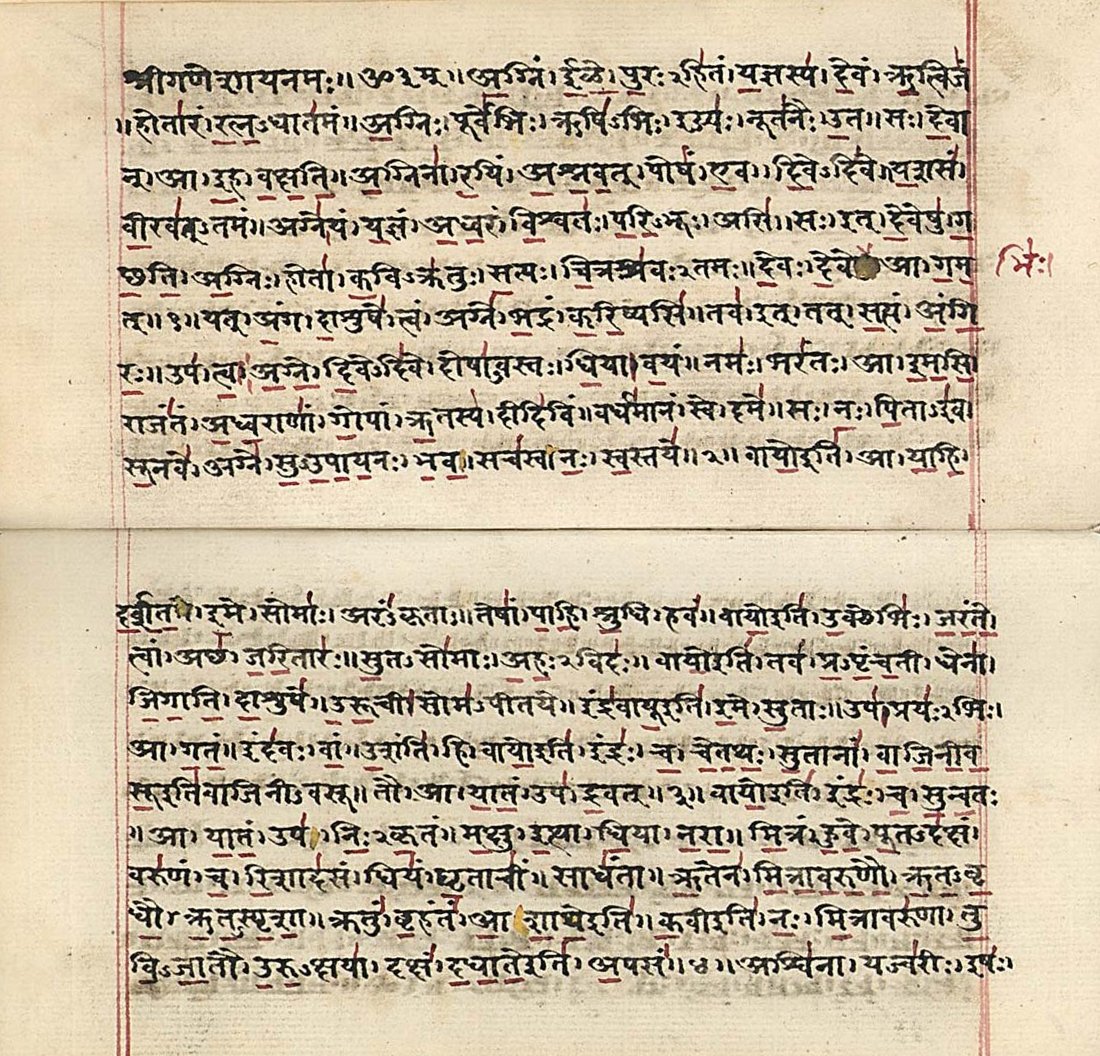
Hymns in Vedic Sanskrit are composed in the greater Punjab; the pin is the Ravi, where Rigveda 7.18 sets the battle of the ten kings.
The Rigveda's ten books of hymns were composed over several centuries and passed down orally, with great precision, long before they were written. Its geography is the Sapta Sindhu, the Indus and the rivers of the Punjab. The river hymn, 10.75, names streams from the Ganga in the east to the Kubha (Kabul) and Gomati (Gomal) in the west, and Hymn 7.18 places King Sudas's victory over ten kings on the Parushni, the Ravi. The pin stands for that region, not a site.
The date is an estimate. Most scholars put the bulk of the hymns around 1500 to 1200 BCE, from the language's closeness to the Avestan of Iran, from the Indic god names in a Mitanni treaty of about 1380 BCE, and because iron first appears only in later Vedic texts. The hymns describe cattle-keeping clans and no cities, and no excavated site can be tied to them. Whether their Sarasvati is the Ghaggar-Hakra, and how Indo-Aryan speakers came to the Punjab, are among the most argued questions in Indian history.
- language
- religion