Rajagriha and the sixteen great realms
Rajgir (Rajagriha), Nalanda district, Bihar
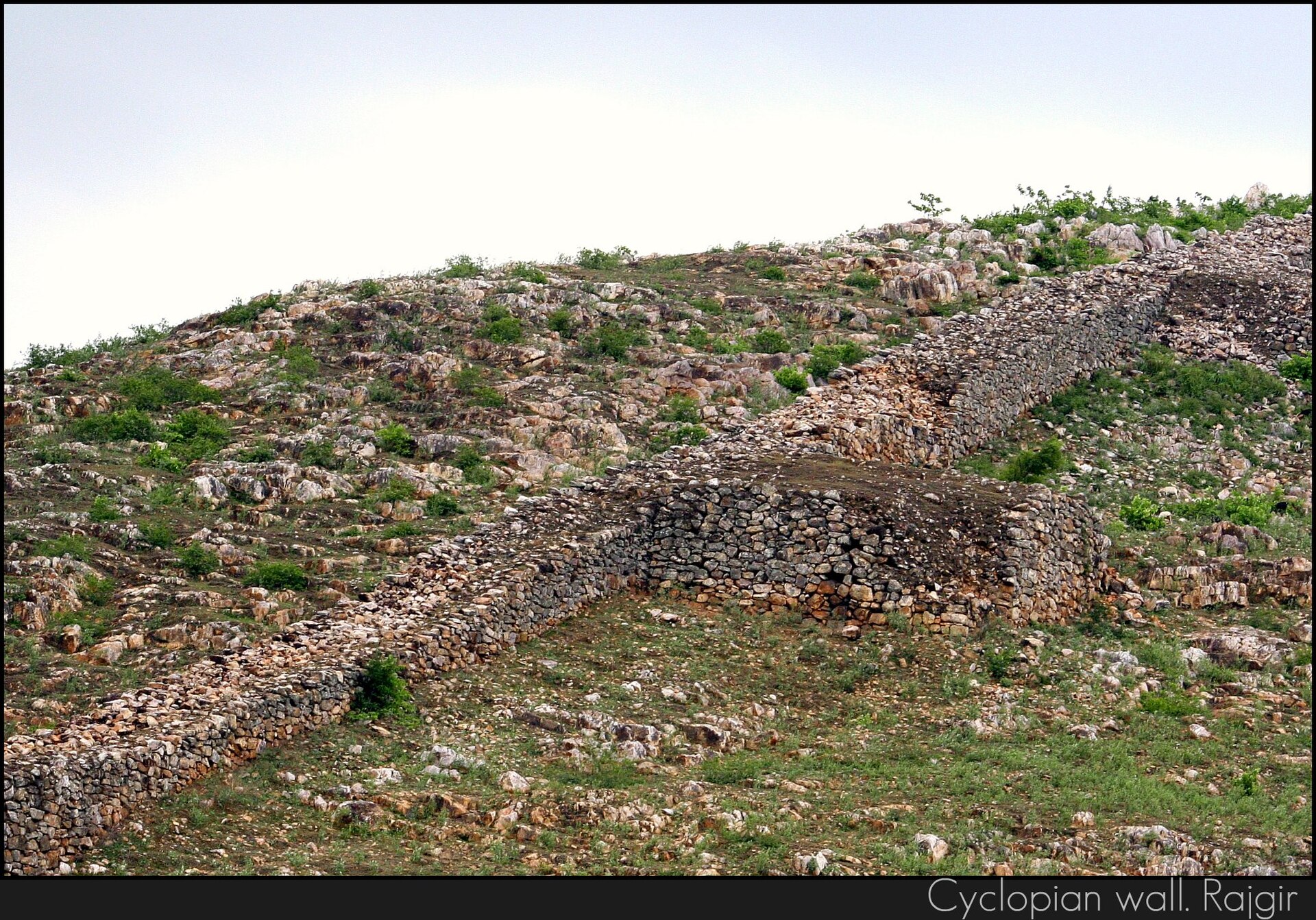
Magadha's hill-ringed capital rises among sixteen rival kingdoms and republics; the Buddha and Mahavira both teach here.
Buddhist and Jain texts list sixteen mahajanapadas, great realms, across the north from Gandhara to Anga. Some were ruled by kings; others, like the Vajji confederacy of Vaishali, by assemblies of clans. Northern Black Polished Ware, punch-marked coins and fortified towns appear in the archaeology of the same centuries. Magadha, with iron ore in the hills to its south and the Ganga trade to its north, absorbed its neighbours one by one.
Rajagriha, ringed by five hills and a stone wall some 40 km round, was its capital under Bimbisara and his son Ajatashatru. The Buddha spent many rainy seasons here, and the first Buddhist council is said to have met in the Saptaparni cave after his death. Mahavira, the twenty-fourth Jain tirthankara, also taught here, and Jain tradition places his death at Pawapuri, a short way to the north-east. His dates move with the Buddha's: the Jain tradition's 527 BCE for his death is earlier than most historians accept. Ajatashatru's successors moved the capital to Pataliputra on the Ganga.
- state-formation
- political
- religion