The Qutb Minar and the Delhi Sultanate
Qutb Minar, Mehrauli, Delhi
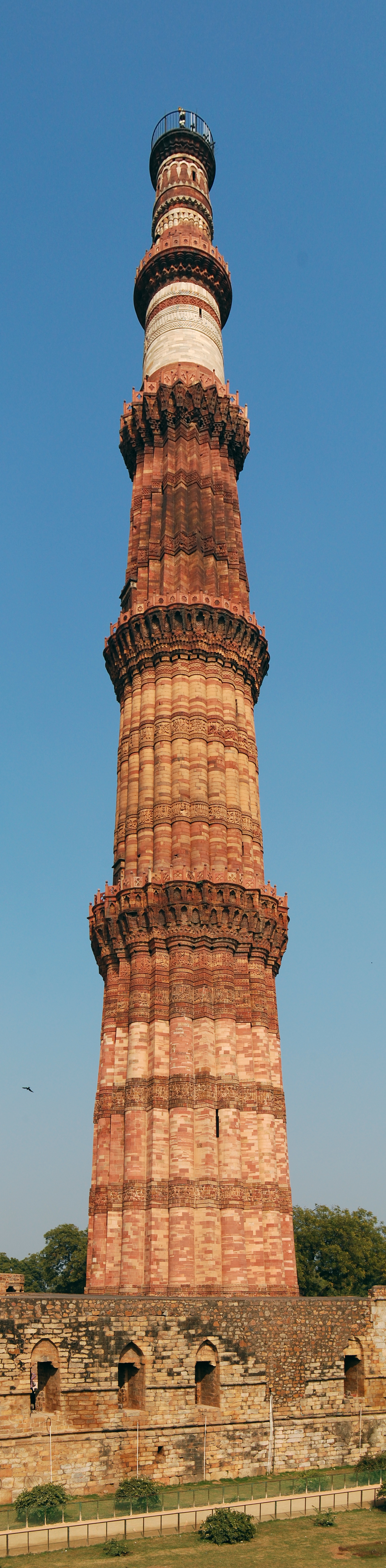
Around 1199 Aibak begins a victory tower beside Delhi's first great mosque; Iltutmish completes it as Delhi becomes the seat of a sultanate.
The mosque later called Quwwat al-Islam was raised in the 1190s inside the citadel the Tomaras and Chahamanas had held, and its own inscription says it was built from the materials of twenty-seven temples. The minar beside it went up in stages: Aibak built the first storey, Iltutmish added three, and Firuz Shah Tughluq replaced the top storey with two after lightning struck it in 1368. It stands 72.5 metres. In the courtyard is an iron pillar of the Gupta period, brought here from elsewhere and some eight hundred years older than the mosque.
When Muhammad of Ghur was killed in 1206 his Indian commanders divided his conquests. Aibak ruled from Lahore; it was Iltutmish, from about 1211, who made Delhi the seat of an independent sultanate. Later sultans built a succession of cities nearby, among them Siri, Tughlaqabad, Jahanpanah and Firozabad, which is why the sultanate's capital survives as a scatter of ruins across Delhi.
Historians disagree over how to read the reused temple stone: as a deliberate display of conquest, as builders' practical recycling, or as both at once.
- state-formation
- art
- religion